
Quick Summary: A back spasm is a sudden, involuntary tightening of the back muscles, most often in the low back. It can feel like a cramp, a deep ache, or a grip that stops you mid-movement. Most spasms settle within days, but ones that keep coming back usually have a reason. Dr. Hansen’s exam looks for what is setting them off and screens for warning signs first.
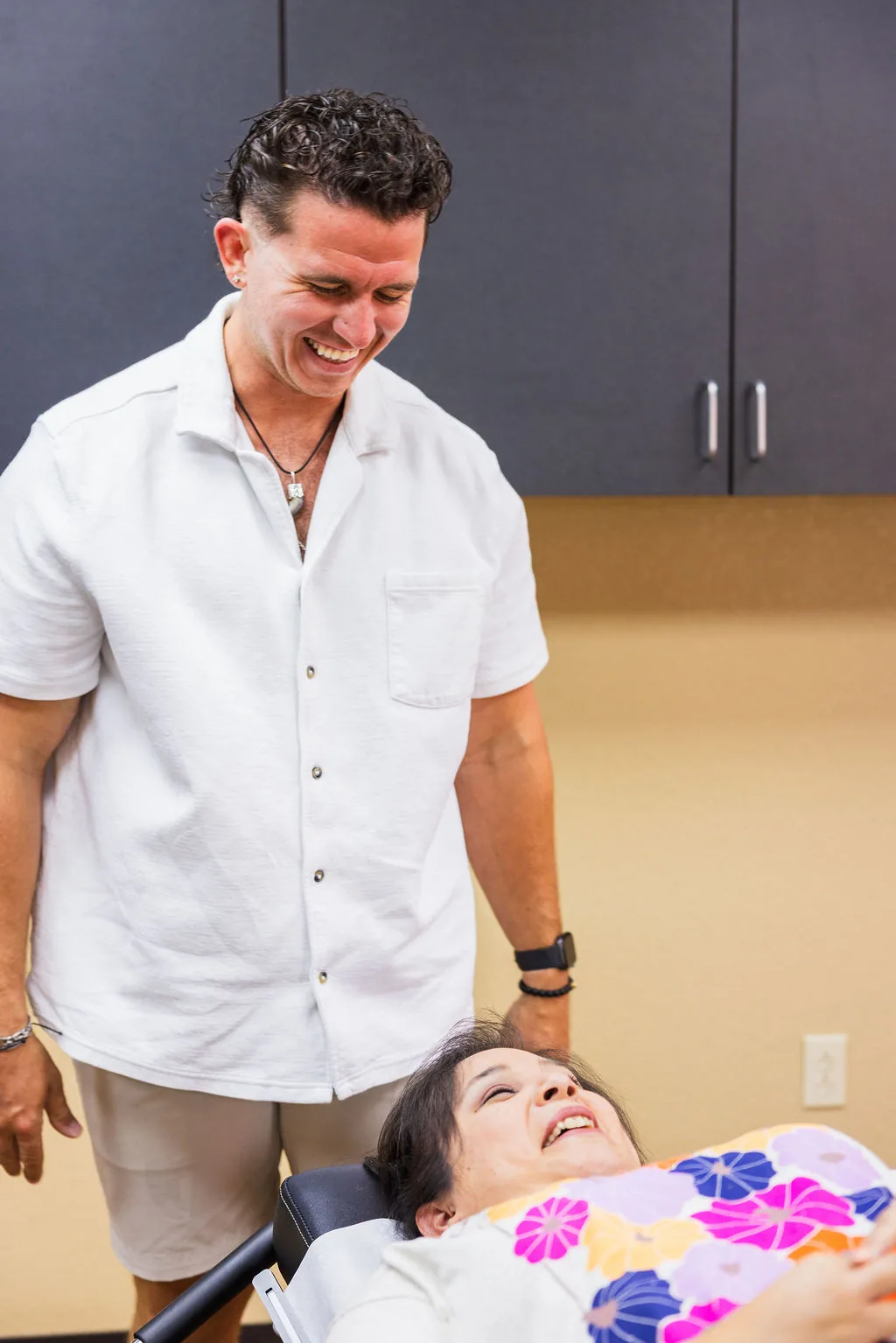
A back spasm is a sudden tightening of the back muscles that you can’t control. Cleveland Clinic describes it as muscles that “suddenly tighten against your will,” and notes the low back is the most common spot. It can range from a twitch or dull ache to a sharp grip that stops you halfway through bending over the sink.
People usually describe:
A spasm is often the body’s way of guarding an area that’s irritated. The muscles clamp down to limit movement, which is why the pain can feel out of proportion to what you were doing. Picking up a laundry basket or reaching for a dropped pen can be the last straw rather than the real cause.
We see this often at our College Station chiropractic clinic, in desk workers, weekend yard warriors, parents lifting kids, and people with physically demanding jobs. A Saturday of yard work in neighborhoods like Castlegate is one of the most common setups we hear about. Many have had the same spasm return every few months and assumed it was just how their back works.
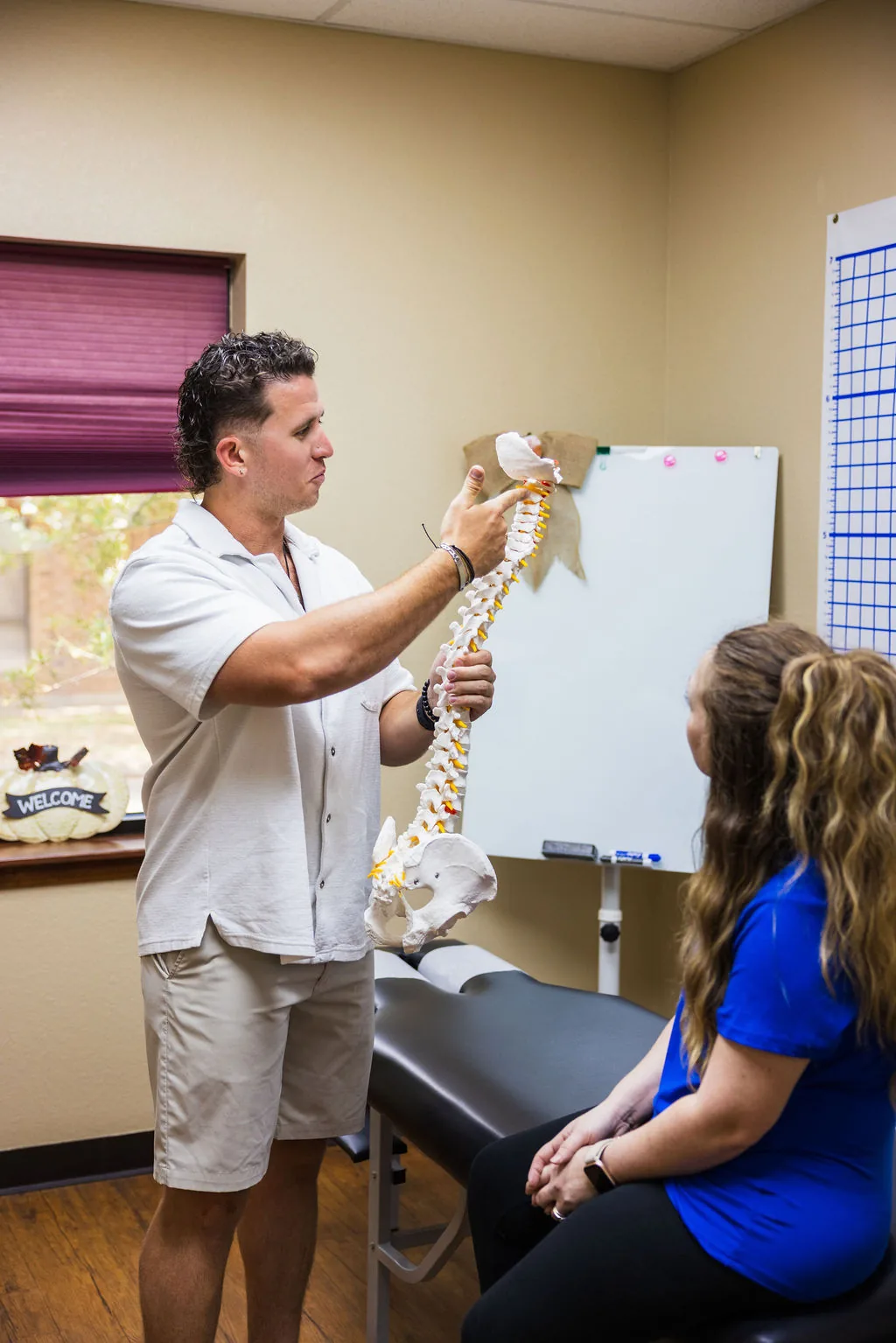
Cleveland Clinic groups the common causes into a few buckets, and most people have more than one:
When spasms keep coming back, something underneath usually hasn’t changed. Stiff joints in the low back or pelvis, an irritated disc, or an irritated sacroiliac joint can all keep the surrounding muscles on guard. A spasm with pain, numbness or tingling running down one leg points toward a nerve, which needs a closer look.
For a fresh spasm, Cleveland Clinic suggests ice or heat for 20 to 30 minutes at a time, wrapped in a towel, and notes that bed rest is no longer recommended. Gentle movement usually beats lying still, and slow, long exhales can help guarded muscles let go. At night, lying on your side with a pillow between your knees, or on your back with one under them, often eases the strain, and these sleeping positions for back pain work well during a flare. Deciding whether heat or ice fits better depends on how fresh the flare is and what feels better to you.
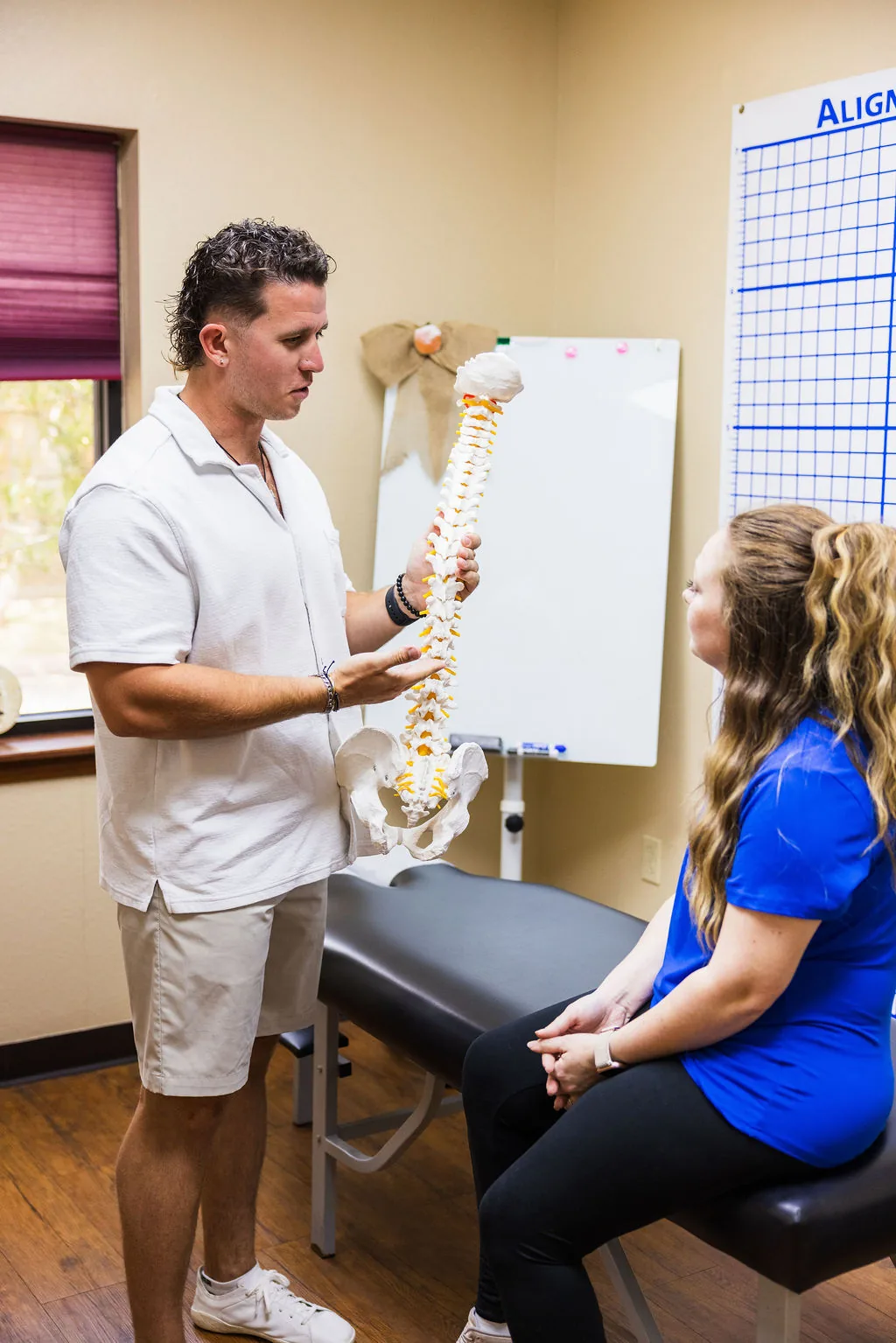
We look for what’s setting the spasms off, not just the muscle that grabbed. Dr. Hansen starts with a detailed history: when the spasms started, what you were doing, how often they return, and whether pain travels into your legs. Then comes a hands-on exam of your low back, pelvis and hips, including range of motion, orthopedic and neurologic testing, and palpation of the muscles and joints. Digital X-rays are taken in-house only when the findings call for them, because an exam comes before any adjustment here.
Care follows three steps. Prime uses guided breathing to help your body settle out of a guarded state, which matters with spasms because the muscles are already braced. Facilitate is a gentle, specific adjustment based on your exam, with Activator available when a lighter touch fits better. Integrate covers what happens between visits: movement, sleep and home exercises. Targeted soft tissue therapy for the tight muscles is often part of the plan.
Most spasms are not dangerous, but some come with signs that need medical care right away. Cleveland Clinic advises seeing a provider promptly for spasms with:
Call 911 if the pain leaves you unable to move. Back pain with fever, pain after a hard fall, or pain along with chest pain also needs medical care first, and we would not adjust anyone with these signs. If yours fits the everyday pattern, we see patients from Bryan and the Brazos Valley, including Navasota and Caldwell. Schedule your first appointment and we’ll find out what keeps triggering them.
A spasm from overuse usually settles within a few days, according to Cleveland Clinic, while a muscle strain can take several weeks. Spasms can go away on their own but tend to come back if whatever set them off hasn’t changed. If they keep returning, or a single episode isn’t easing after about a week, it’s worth getting your back examined.
A spasm is the muscle itself tightening hard, usually with a knotted, tender spot. A pinched nerve is pressure on a nerve root, which more often brings pain, numbness or tingling that travels down a leg. The two can overlap, because an irritated nerve or disc can make the nearby muscles guard. Testing strength, reflexes and sensation during the exam helps tell them apart.
No. Bed rest is no longer recommended for back spasms. Short breaks lying down are fine when the pain is sharp, but gentle walking and normal activity, within what you can tolerate, usually help the muscles relax sooner. Getting up and moving every 30 minutes or so is also a good habit if you sit for work.
Usually because something in that area is still irritated or stiff, so the muscles keep guarding it. A low back joint that doesn’t move well, an irritated disc, or an SI joint problem can all keep the same muscles on alert. Long hours of sitting and weak core muscles add to it. The exam is how we find which of these is driving your spasms.
When it comes with loss of bladder or bowel control, numbness in the groin, new weakness in your legs, or numbness or weakness on one side of the body. Call 911 if the pain leaves you unable to move, and get medical care first for back pain with fever, after a fall or crash, or with chest pain. Those situations need a physician or the ER, not a chiropractic visit.
Yes. We see Texas A&M faculty, staff and students from across College Station, along with families and people with physically demanding jobs. Long days at a desk followed by a weekend of yard work or moving is a pattern we hear about a lot. Your first visit includes a full history and exam, so we can sort out what’s behind the spasms before care starts.
Proudly serving College Station and Bryan, River of Life Chiropractic starts every visit with a real exam, not a guess. Ready to find out what’s actually going on?
Real feedback from the patients we’ve had the privilege to care for


 Trustindex verifies that the original source of the review is Google.
 Trustindex verifies that the original source of the review is Google.
 Trustindex verifies that the original source of the review is Google.
 Trustindex verifies that the original source of the review is Google.
 Trustindex verifies that the original source of the review is Google.
 Trustindex verifies that the original source of the review is Google.
 Trustindex verifies that the original source of the review is Google.
 Trustindex verifies that the original source of the review is Google.
 Trustindex verifies that the original source of the review is Google.
 Trustindex verifies that the original source of the review is Google.
College Station is home base, but patients regularly drive in from Bryan, Navasota, Caldwell, and Snook for care, most traveling somewhere between 30 and 45 minutes to get here. Within College Station itself, we see a lot of familiar faces from Pebble Creek, Indian Lakes, Southern Pointe, and the Castlegate and Castlerock communities.
Wherever you are driving in from, the visit looks the same: a real exam first, X-rays when they are actually needed, and a plan built around what your body is showing us, not a guess based on your zip code.
Contact us for expert chiropractic care in College Station, TX.
Monday: 9am – 1pm, & 3pm – 6pm
Tuesday: 3pm – 6pm
Wednesday: 9am – 1pm, & 3pm – 6pm
Thursday: 9am – 1pm, & 3pm – 6pm
Friday: 9am – 1pm, & 3pm – 6pm
Saturday: Closed
Sunday: Closed
