
Quick Summary: Spinal stenosis is a narrowing of the spaces inside the spine that can press on the nerves, most often in the low back or neck. The classic sign is leg pain, cramping or numbness that builds when you stand or walk and eases when you sit or bend forward. It’s most common after 50 and usually comes from age-related changes like thickened ligaments, bone spurs and worn discs. Dr. Hansen’s exam checks how much the nerves are involved and whether you need a specialist.
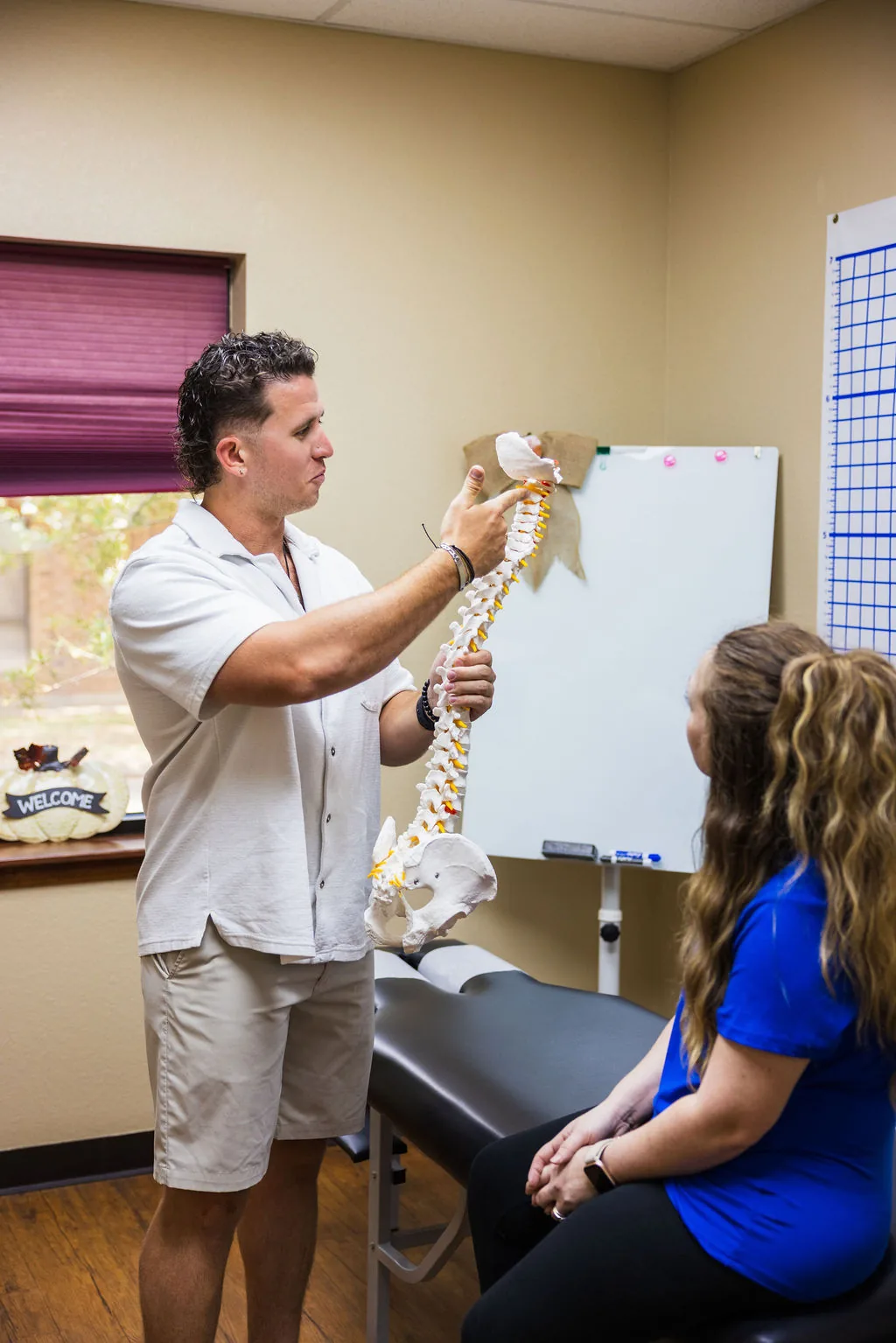
Spinal stenosis is a narrowing of the space inside your spine where the spinal cord and nerves run. Mayo Clinic explains that it happens when that space is too small, which can put pressure on the nerves. It’s most common in the low back and the neck, and most people with it are over 50.
Many people with narrowing on imaging have no symptoms at all. When symptoms do show up, they usually start slowly and build over time. In the low back, the National Institutes of Health describes:
In the neck, stenosis can cause neck pain along with numbness, tingling or weakness in the arms and hands, and sometimes trouble with balance or walking.
Golfers, walkers and active retirees from Indian Lakes and across the Brazos Valley often come in because their walks keep getting shorter. That’s one of the most common reasons people look for chiropractic care in College Station later in life.
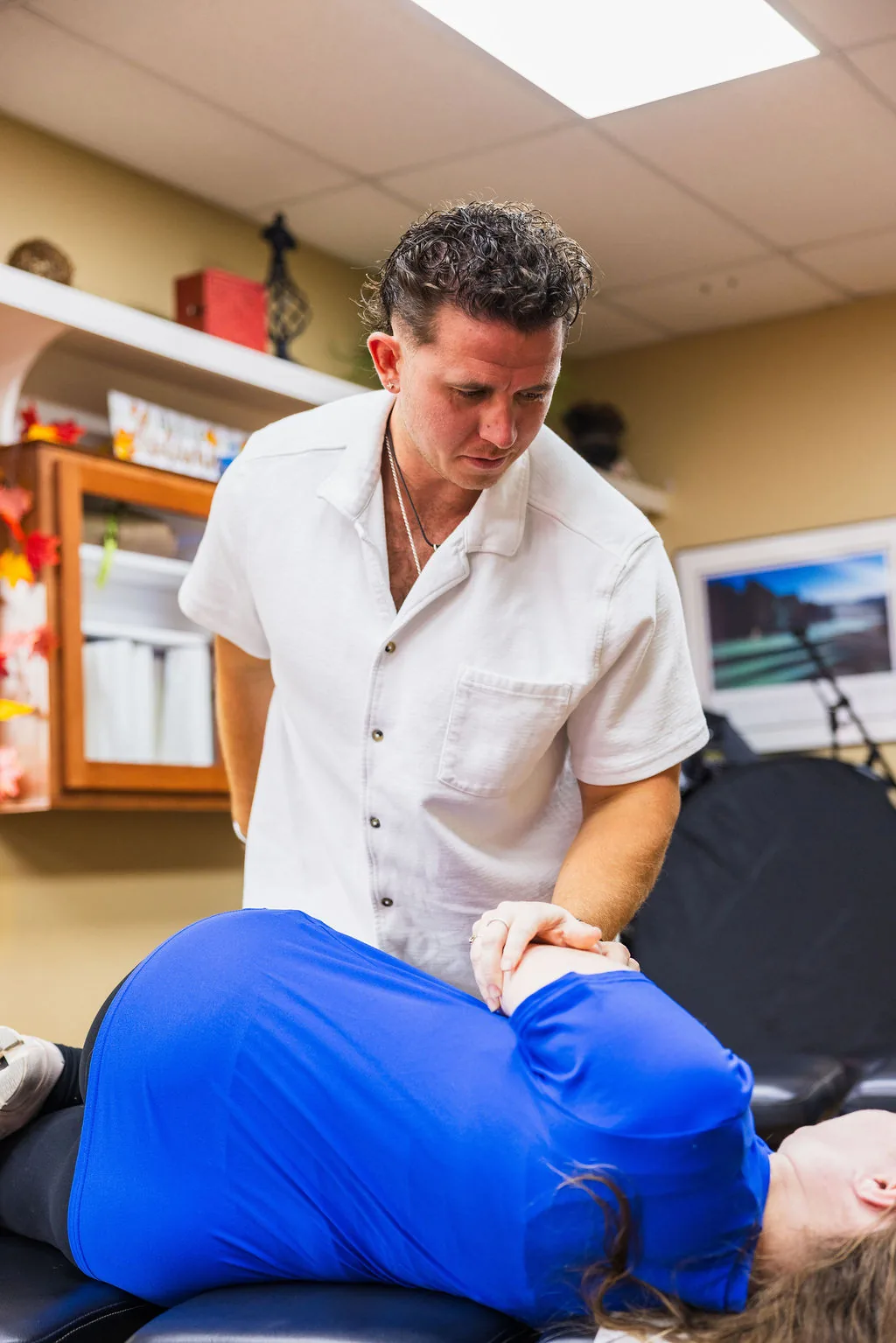
Standing up straight and walking narrow the spaces in your low back a little more, and bending forward or sitting opens them back up. That’s why stenosis often feels worse the longer you stand or walk and better when you sit down, lean on a shopping cart or bend forward. The NIH notes that sitting or flexing the low back or neck may relieve symptoms.
The narrowing itself usually comes from changes that build up with age. The NIH lists thickened ligaments, bone spurs, bulging discs, enlarged facet joints and a vertebra slipping forward among the most common causes. Arthritis plays a big role, and some people are born with a narrower canal. Wear in the discs, often labeled degenerative disc disease, is part of the same picture.
Stenosis and sciatic nerve pain can feel alike because both irritate the nerves to the legs. A few differences help:
Telling stenosis apart from sciatica comes down to these patterns plus a careful exam.
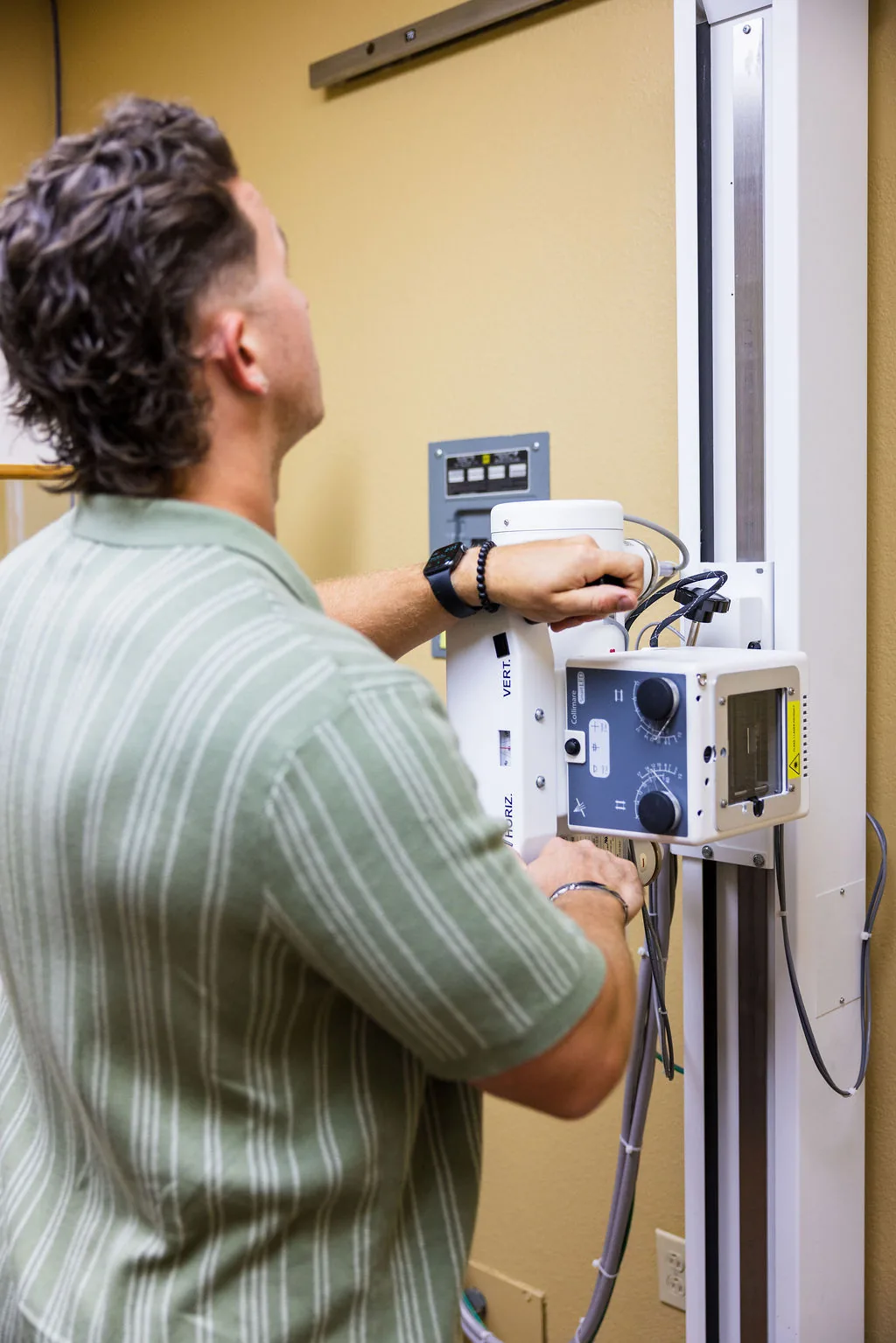
We start by finding out how much the nerves are involved. Dr. Hansen asks how far you can walk before symptoms start, what eases them, and whether you’ve noticed numbness, weakness or balance changes. The exam includes range of motion, orthopedic and neurologic testing of reflexes, strength and sensation in the legs, and palpation of the spine and hips. Digital X-rays are available in-house, and if you already have an MRI, he’ll go over it with you in plain language.
When care is a good fit, it follows three steps. Prime uses guided breathing to help guarded muscles in the back and hips settle. Facilitate is a gentle adjustment to the stiff areas of the spine and pelvis, with lower-force options like Activator when they fit better. Integrate covers exercises that build strength and keep you walking, including positions that take pressure off the low back. It’s the same plan behind our low back pain and sciatica care.
Stenosis is a condition where referral matters. Mayo Clinic notes that, rarely, severe untreated stenosis can lead to permanent numbness, weakness, balance problems or loss of bladder or bowel control. Get medical care right away for:
If the exam shows significant nerve compression, Dr. Hansen refers you to a spine specialist. For everyday stenosis symptoms, schedule your first appointment and we’ll take a careful look.
Chiropractic care can’t widen the spinal canal, but it can help the stiff joints and tight muscles around it and improve how your spine and hips move. Paired with exercise and walking strategies, the goal is less pain and more time on your feet. Dr. Hansen checks for severe nerve compression first and refers you when a specialist is the better fit.
Usually, yes, in a way your back tolerates. Short walks with rests, leaning slightly forward on a cart or walker, or a stationary bike can keep you active without building symptoms as fast. Staying active helps keep the muscles around your spine strong. Walking that brings on growing weakness or numbness should be checked.
Spinal stenosis is a narrowing of the spaces in the spine, while sciatica describes pain along the sciatic nerve down the leg. Stenosis can cause sciatica-like symptoms, but they usually build with standing or walking and ease when you sit or bend forward. Sciatica from a disc often feels worse with sitting and usually affects one leg.
Symptoms often build slowly, and many people stay stable for years with the right habits and care. Mayo Clinic notes that, rarely, severe stenosis left untreated can lead to permanent numbness, weakness or loss of bladder or bowel control. That’s why new or worsening nerve symptoms deserve a prompt exam.
Most people start with conservative care like exercise, activity changes and hands-on care. Surgery is usually considered when nerve compression is significant, getting worse, or limiting daily life despite care. If your exam points that way, Dr. Hansen refers you to a spine specialist to talk through your options.
Yes. Many of our stenosis patients drive in from Navasota, Caldwell, Snook and Bryan as well as College Station. Your first visit includes a full history and exam, so we can explain what’s narrowing, how much the nerves are involved, and what we can realistically help with.
Proudly serving College Station and Bryan, River of Life Chiropractic starts every visit with a real exam, not a guess. Ready to find out what’s actually going on?
Real feedback from the patients we’ve had the privilege to care for


 Trustindex verifies that the original source of the review is Google.
 Trustindex verifies that the original source of the review is Google.
 Trustindex verifies that the original source of the review is Google.
 Trustindex verifies that the original source of the review is Google.
 Trustindex verifies that the original source of the review is Google.
 Trustindex verifies that the original source of the review is Google.
 Trustindex verifies that the original source of the review is Google.
 Trustindex verifies that the original source of the review is Google.
 Trustindex verifies that the original source of the review is Google.
 Trustindex verifies that the original source of the review is Google.
College Station is home base, but patients regularly drive in from Bryan, Navasota, Caldwell, and Snook for care, most traveling somewhere between 30 and 45 minutes to get here. Within College Station itself, we see a lot of familiar faces from Pebble Creek, Indian Lakes, Southern Pointe, and the Castlegate and Castlerock communities.
Wherever you are driving in from, the visit looks the same: a real exam first, X-rays when they are actually needed, and a plan built around what your body is showing us, not a guess based on your zip code.
Contact us for expert chiropractic care in College Station, TX.
Monday: 9am – 1pm, & 3pm – 6pm
Tuesday: 3pm – 6pm
Wednesday: 9am – 1pm, & 3pm – 6pm
Thursday: 9am – 1pm, & 3pm – 6pm
Friday: 9am – 1pm, & 3pm – 6pm
Saturday: Closed
Sunday: Closed
