
Spinal Stenosis vs. Sciatica: How to Tell the Difference
Both can send pain, numbness or cramping down your legs, and both get blamed for the same symptoms. But spinal stenosis and sciatica behave differently, and the difference changes what helps. Here is how to tell them apart.
The Short Answer
Spinal stenosis is a narrowing of the spaces in the spine, while sciatica is pain along the sciatic nerve down the leg. The biggest clue is what happens when you sit: stenosis usually eases when you sit or bend forward and builds when you stand or walk, while sciatica from a disc often feels worse with sitting and bending.
Stenosis tends to show up after 50 and can affect both legs. Sciatica is more often one-sided and can happen at any adult age. They can also overlap, which is why an exam matters.
What Each Term Means
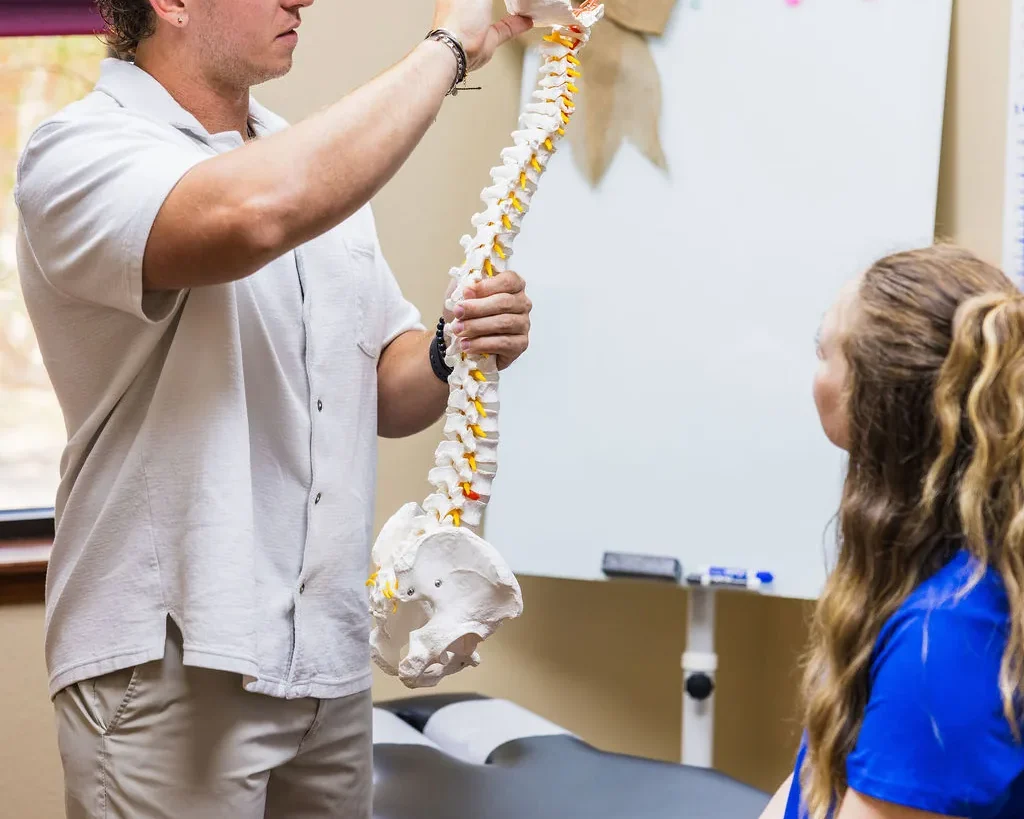
Spinal stenosis describes a structure. Mayo Clinic on spinal stenosis explains it happens when the space inside the backbone is too small, which can press on the spinal cord and nerves. Most people with it are over 50, and it usually comes from arthritis, bone spurs, thickened ligaments or bulging discs.
Sciatica describes a symptom: pain that follows the sciatic nerve from the low back through the buttock and down the leg. It’s most often caused by a disc pressing on a nerve root, which is why people with a bulging or herniated disc often feel it.
So stenosis can cause sciatica, but not all sciatica comes from stenosis.
Five Clues That Point One Way or the Other
- Sitting: stenosis usually feels better sitting down. Disc-related sciatica often feels worse after long sitting.
- Walking and standing: stenosis symptoms build the longer you stand or walk and fade when you rest. Sciatica doesn’t follow that pattern as closely.
- Bending forward: leaning on a shopping cart or bending forward often eases stenosis. Bending forward can make disc-related sciatica worse.
- One leg or both: sciatica usually affects one leg. Stenosis can affect one or both.
- Age: stenosis is most common after 50. Sciatica from a disc is more common in younger and middle-aged adults.
The National Institutes of Health describes the classic stenosis pattern as a burning ache through the buttocks and legs that’s worse with standing or walking, and notes that sitting or flexing the spine may relieve it.
Why They Overlap
The two often show up together. The same age-related changes that narrow the spine can also irritate a single nerve root, producing classic sciatica on top of stenosis. A disc that bulges into an already narrow canal can do both at once. Pain in the buttock and leg can also come from the SI joint or a tight piriformis muscle, which is why SI joint pain and sciatica get mixed up so often.
Patterns help you guess. A hands-on exam is what sorts out which nerve is involved and why.
What Helps Each One
Both usually start with conservative care, but the details differ.
- For stenosis: positions that open the spine, like sitting or a slight forward lean, short walks with rests, strengthening for the hips and core, and staying active.
- For disc-related sciatica: breaking up long sitting, gentle walking, and movements that take pressure off the disc, chosen based on what eases your leg pain.
Either way, relief from sciatica usually comes from matching the plan to the cause. For narrowing confirmed on imaging, care for spinal stenosis in College Station starts with how far you can walk and what eases it.
What a Visit Looks Like at River of Life
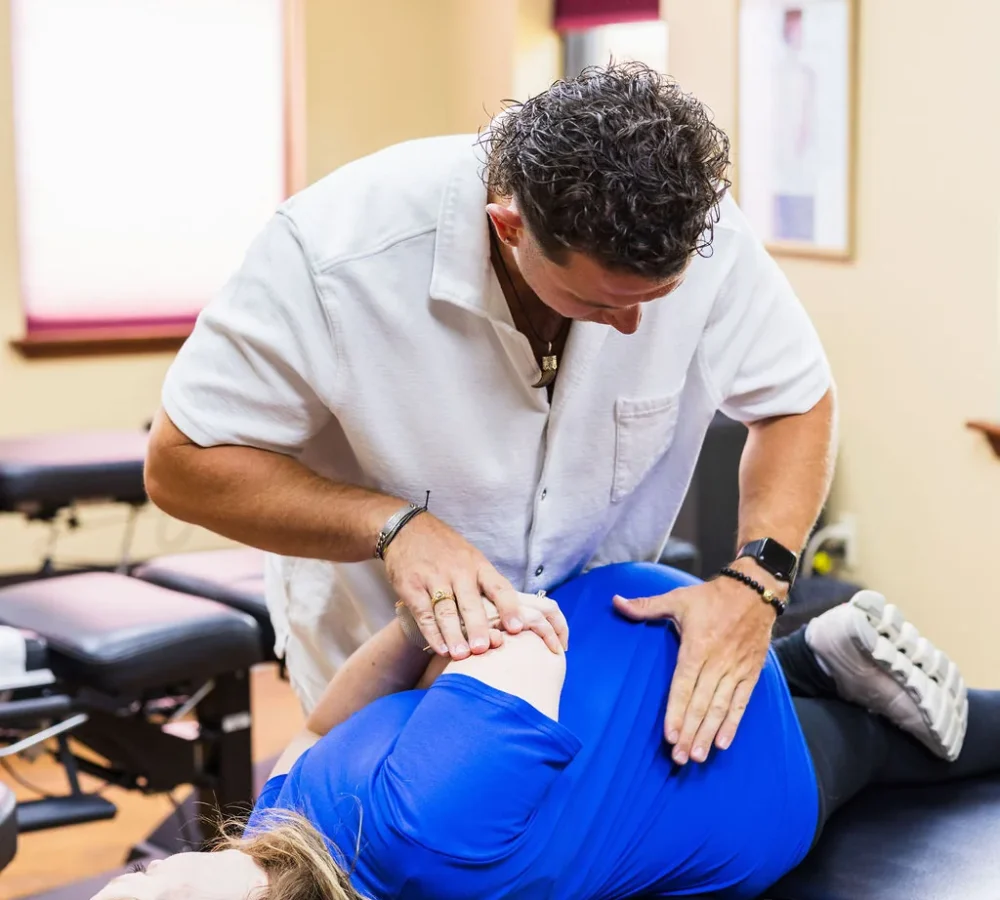
Every first visit starts with your history: where the leg symptoms go, how far you can walk, and what happens when you sit or bend. Then comes a hands-on exam with range of motion, orthopedic and neurologic testing of leg strength, reflexes and sensation, and palpation of the spine, pelvis and hips. Sorting out stenosis from sciatica is why we always examine first. If care is a good fit, it follows three steps: Prime, guided breathing to help guarded muscles settle; Facilitate, a gentle adjustment with lower-force options when they fit better; and Integrate, exercises and walking strategies you can use at home.
When Leg Symptoms Need Medical Care
Most stenosis and sciatica symptoms can be managed conservatively. Mayo Clinic notes that, rarely, severe stenosis left untreated can cause permanent nerve problems, so these signs need care right away.
Get medical care right away for:
- Numbness in the groin or inner thighs
- New trouble controlling your bladder or bowels
- Leg weakness that keeps getting worse or causes falls
- Growing clumsiness or weakness in the hands
- Severe pain after a fall or crash
Not sure which one you have?
We’re glad to answer questions before you book. See what to expect at your first visit.
Sources
This article is for general education and is not medical advice. For questions about your own health, talk with your doctor or another qualified healthcare provider.
From the team at River of Life Chiropractic, 4519 Mills Park Cir Ste 300, College Station, TX 77845.
About the Author
Dr. Levi Hansen, DC
Founder of River of Life Chiropractic in College Station, TX
Webster Certified (ICPA)B.S. Neuroscience, WSU
Raised in Kenai, Alaska, Dr. Hansen played football at Washington State, earned a B.S. in Neuroscience, then his Doctor of Chiropractic from Parker University. Every visit starts with a real exam, followed by his three-step Prime, Facilitate, Integrate process.
- Every visit starts with a physical exam
- Nervous system scans and digital X-rays
- Care for families, athletes and expecting moms
- 4519 Mills Park Cir Ste 300, College Station, TX
Prefer to call? (979) 383-2105
What College Station Is Saying
Real feedback from the patients we’ve had the privilege to care for


 Trustindex verifies that the original source of the review is Google.
 Trustindex verifies that the original source of the review is Google.
 Trustindex verifies that the original source of the review is Google.
 Trustindex verifies that the original source of the review is Google.
 Trustindex verifies that the original source of the review is Google.
 Trustindex verifies that the original source of the review is Google.
 Trustindex verifies that the original source of the review is Google.
 Trustindex verifies that the original source of the review is Google.
 Trustindex verifies that the original source of the review is Google.
 Trustindex verifies that the original source of the review is Google.
VISIT OUR OFFICE
Contact us for expert chiropractic care in College Station, TX.
PHONE
HOURS
Monday: 9am – 1pm, & 3pm – 6pm
Tuesday: 3pm – 6pm
Wednesday: 9am – 1pm, & 3pm – 6pm
Thursday: 9am – 1pm, & 3pm – 6pm
Friday: 9am – 1pm, & 3pm – 6pm
Saturday: Closed
Sunday: Closed