
Quick Summary: Most rib pain comes from the muscles between the ribs or the small joints where the ribs meet the spine or breastbone, often after a twist, a hard cough, lifting or sleeping awkwardly. It usually hurts more with deep breaths, twisting or reaching. Rib or chest pain with shortness of breath, sweating, nausea or dizziness needs emergency care right away, since it can be a heart problem. Dr. Hansen’s exam rules out red flags and finds which joints and muscles are involved.
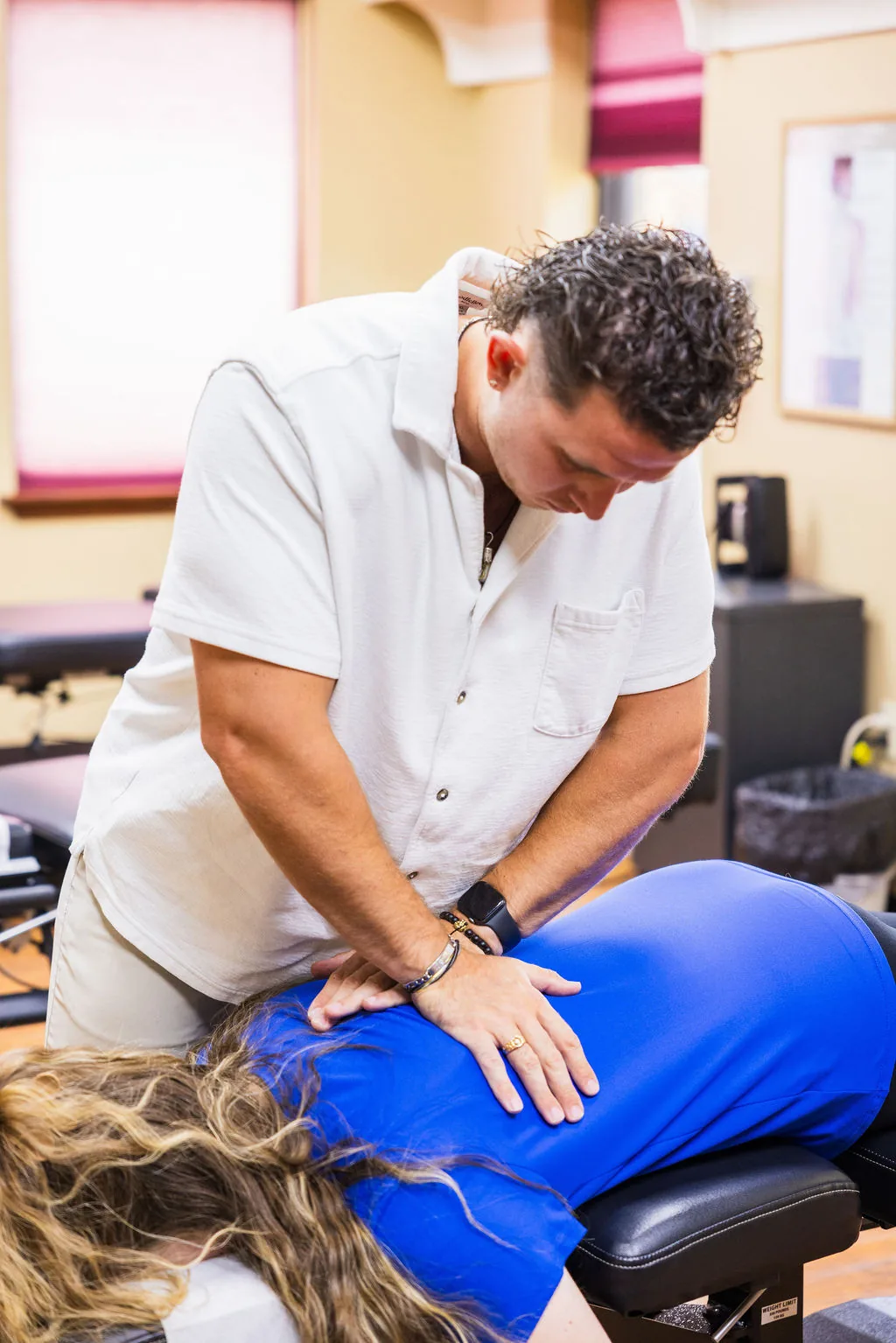
Most rib pain comes from the muscles and joints of the rib cage, not the bones. Each rib connects to the spine in the back, and most also connect to the breastbone in the front through cartilage. Those joints move every time you breathe, twist or reach, so when one gets irritated or stiff, you feel it with almost every movement.
In the front, a common cause is costochondritis. Cleveland Clinic describes it as painful inflammation of the cartilage that connects the ribs to the breastbone, usually felt as a dull ache that turns sharp with movement. Deep breathing, coughing, twisting and reaching overhead can make it worse, and most people have symptoms for a few days to a few weeks.
In the back, rib pain often comes from the joints where the ribs meet the spine and the muscles around them. It can feel like a sharp catch next to the spine or a band of pain wrapping around the side. It’s often mistaken for pain near the shoulder blades, and the two can show up together.
Common triggers we see:
We see this often in weekend golfers and gym-goers from Castlerock and around College Station.
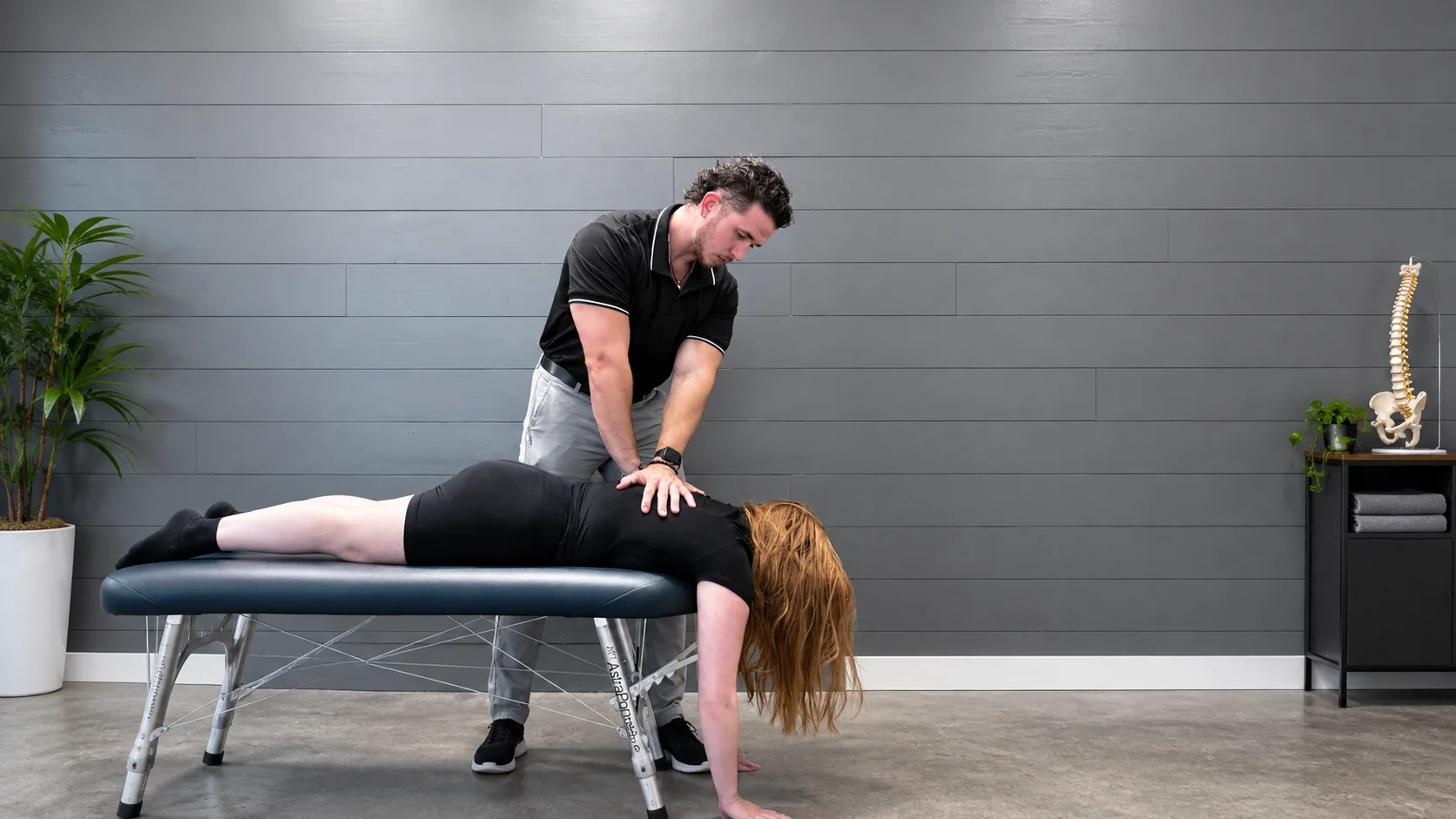
Rib pain hurts with breathing and twisting because the ribs move with every breath. When you inhale deeply, each rib lifts and rotates slightly at its joints in the back and front. If one of those joints is irritated, or the muscles between the ribs are strained, that small motion is enough to set off sharp pain.
The ribs also move whenever your mid back turns. A stiff mid back puts more load on the rib joints, and long hours hunched over a desk or phone keep the rib cage compressed. That’s one reason rounded, forward posture and rib pain often go together.
A less common cause is slipping rib syndrome. Cleveland Clinic explains that it happens when the cartilage of a lower rib, usually ribs 8 to 10, loosens and slips, causing sudden, stabbing pain and sometimes a pop or click with coughing, reaching or rolling over in bed. It usually doesn’t show on standard X-rays, because the rib only slips during movement.
Simple steps that help many people with a strained rib area:
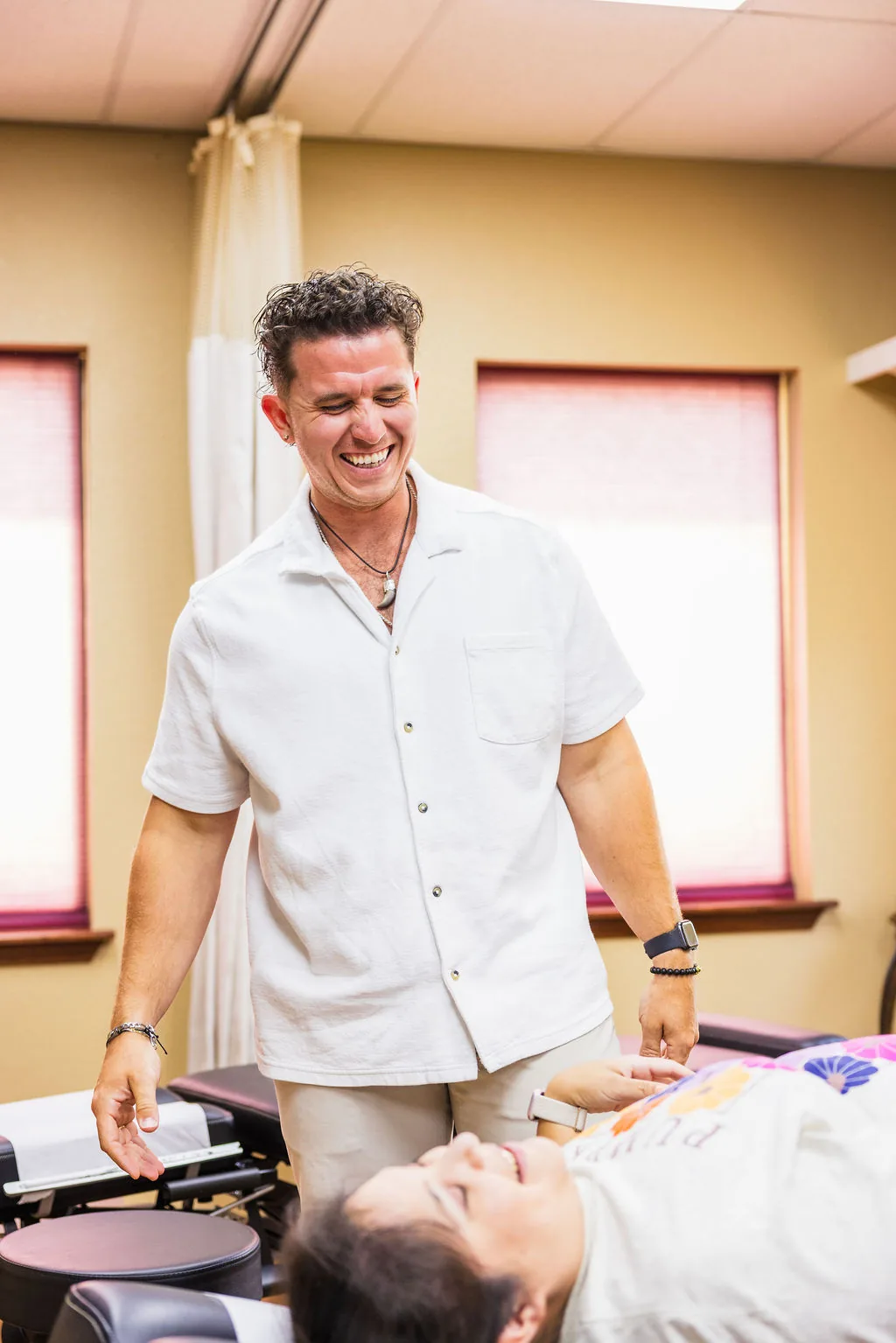
We rule out what shouldn’t wait before anything else. Chest and rib pain can come from the heart, the lungs or a cracked rib, so Dr. Hansen asks how it started, what makes it worse, and whether you have shortness of breath, fever, a cough or other symptoms. The exam includes range of motion of the mid back, orthopedic and neurologic testing, and palpation of the ribs, spine and muscles to find which joint or muscle reproduces your pain. Digital X-rays are available in-house when a fracture or other problem needs to be ruled out.
When care is a good fit, it follows three steps. Prime uses guided breathing, which matters even more when every breath hurts. Facilitate includes gentle adjustments to the stiff mid back and rib joints, plus soft tissue work on the muscles between and around the ribs. Integrate covers mobility and breathing exercises and changes to how you lift, sit and sleep. For golfers and other rotation athletes, our sports chiropractic for golfers also looks at how you turn and swing.
Get emergency care right away if rib or chest pain comes with:
Cleveland Clinic advises calling emergency services if you think you may be having heart attack symptoms. If yours fits the everyday pattern and you live in one of the areas we serve, book your first appointment and we’ll find what’s causing it.
Rib or chest pain is serious if it comes with shortness of breath, pressure or squeezing, pain spreading to the arm or jaw, sweating, nausea or dizziness. Call 911 for those. Pain after a fall or crash, or with fever and a cough, also needs prompt medical care. Pain that only changes with breathing, twisting or pressing on one spot is more likely muscular.
Most rib pain from a strain or irritated joint improves within a few days to a few weeks. Cleveland Clinic notes that costochondritis usually lasts a few days to a few weeks, though it can come back. Rib pain that lasts longer, keeps returning or is getting worse deserves an exam.
Yes, when the pain comes from stiff rib joints, a stiff mid back or strained muscles around the ribs. Gentle adjustments, soft tissue work and breathing exercises help many people move and breathe comfortably again. Dr. Hansen rules out heart, lung and fracture concerns first and refers you for medical care when needed.
Your ribs lift and rotate slightly at their joints every time you inhale. If a rib joint is irritated or the muscles between the ribs are strained, that motion pulls on the sore spot. Breathing pain with fever, cough or shortness of breath needs medical care, since the lungs can also cause it.
Most people are more comfortable on their back, propped up slightly with pillows, or on the side that doesn’t hurt. Hugging a pillow can support the rib cage and keep you from rolling onto the sore side. Avoid sleeping on your stomach, which twists the mid back and compresses the ribs.
Yes. We see rib and mid back pain from people across College Station, Bryan, Navasota and the rest of the Brazos Valley, from desk workers to golfers and people with physical jobs. Your first visit includes a full history and exam, so we can rule out red flags and find which joints or muscles are involved.
Proudly serving College Station and Bryan, River of Life Chiropractic starts every visit with a real exam, not a guess. Ready to find out what’s actually going on?
Real feedback from the patients we’ve had the privilege to care for


 Trustindex verifies that the original source of the review is Google.
 Trustindex verifies that the original source of the review is Google.
 Trustindex verifies that the original source of the review is Google.
 Trustindex verifies that the original source of the review is Google.
 Trustindex verifies that the original source of the review is Google.
 Trustindex verifies that the original source of the review is Google.
 Trustindex verifies that the original source of the review is Google.
 Trustindex verifies that the original source of the review is Google.
 Trustindex verifies that the original source of the review is Google.
 Trustindex verifies that the original source of the review is Google.
College Station is home base, but patients regularly drive in from Bryan, Navasota, Caldwell, and Snook for care, most traveling somewhere between 30 and 45 minutes to get here. Within College Station itself, we see a lot of familiar faces from Pebble Creek, Indian Lakes, Southern Pointe, and the Castlegate and Castlerock communities.
Wherever you are driving in from, the visit looks the same: a real exam first, X-rays when they are actually needed, and a plan built around what your body is showing us, not a guess based on your zip code.
Contact us for expert chiropractic care in College Station, TX.
Monday: 9am – 1pm, & 3pm – 6pm
Tuesday: 3pm – 6pm
Wednesday: 9am – 1pm, & 3pm – 6pm
Thursday: 9am – 1pm, & 3pm – 6pm
Friday: 9am – 1pm, & 3pm – 6pm
Saturday: Closed
Sunday: Closed
