
Quick Summary: A stiff neck is usually caused by strained muscles and irritated joints from sleeping in an awkward position, long hours looking down at a screen, or stress. Most cases ease within a few days with gentle movement and heat. Stiffness that lasts longer than that, keeps coming back, or follows a car accident deserves an exam, and a stiff neck with fever, confusion or light sensitivity needs emergency care right away.
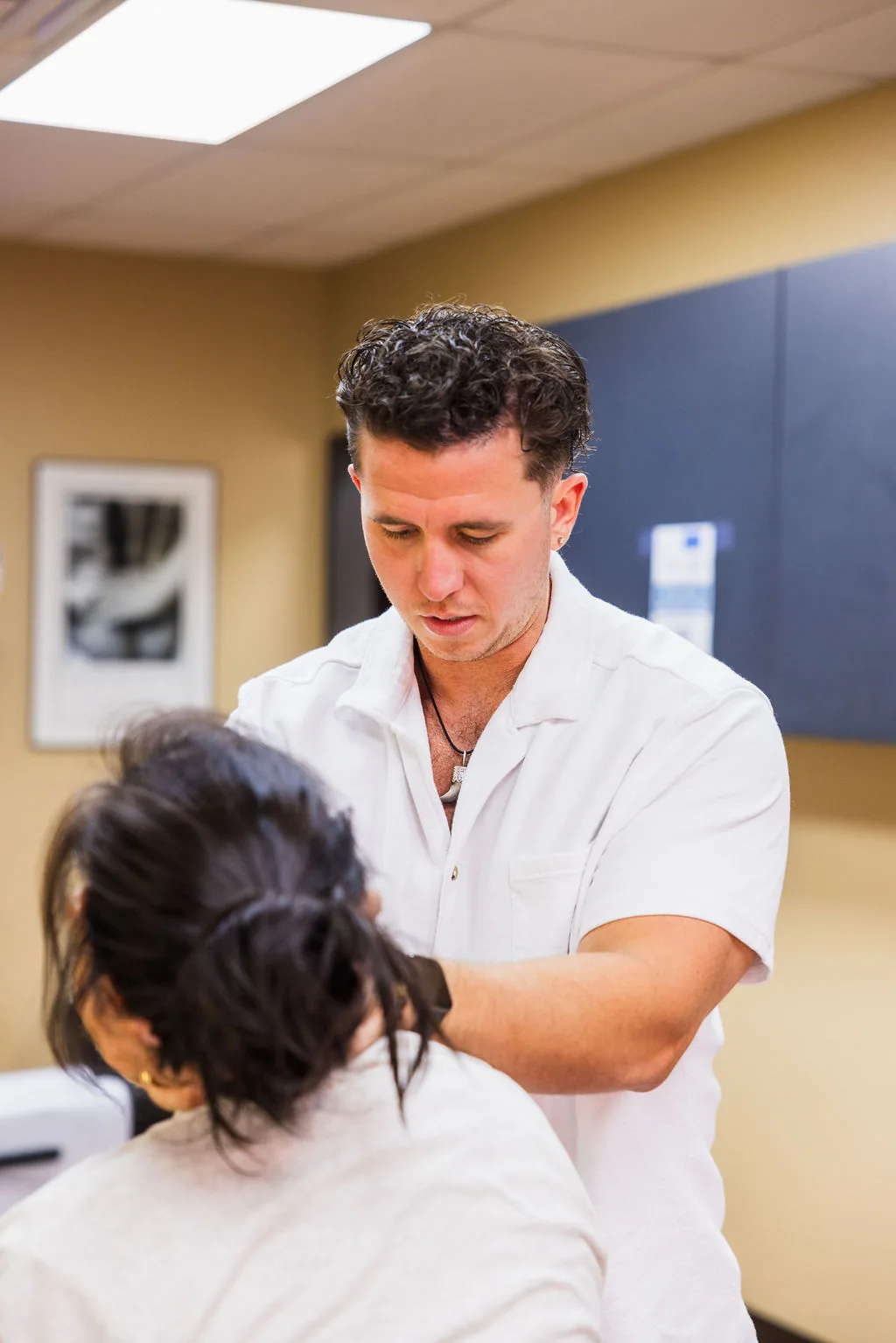
Most stiff necks come from strained muscles and irritated joints, not anything serious. Cleveland Clinic lists sleeping in an awkward position, long periods looking at screens, and stress among the most common causes, along with sprains and injuries like whiplash. The muscles tighten to protect the area, and that guarding is what makes it so hard to turn your head.
Your neck has seven small vertebrae with a pair of joints on each level. When one of those joints gets stiff or irritated, the muscles around it tighten to keep it still. That’s why a stiff neck often hurts more on one side and locks up in one direction, like checking your blind spot or looking over your shoulder.
Common triggers we hear about:
We see this a lot with students and staff around Texas A&M, and with commuters from Castlegate and the south side of College Station who spend long stretches in the car.

A stiff neck keeps coming back when the habits and stiffness behind it never change. The first episode often eases in a few days, but if the joints in your neck and upper back are still moving poorly, the same strain sets it off again: another long study session, another night on the wrong pillow.
Repeat stiffness often comes with other signs. Some people get neck-related headaches on the stiff side, starting at the base of the skull. Others notice their shoulders creeping forward, or tightness between the shoulder blades by the end of the day. Stiffness that started after a car accident or collision can also linger, because whiplash strains the ligaments and muscles in ways that don’t always hurt right away.
For a fresh stiff neck, Cleveland Clinic’s home care advice comes down to a few simple steps:
If you keep waking up with a stiff neck, your pillow and sleeping position are worth a closer look.
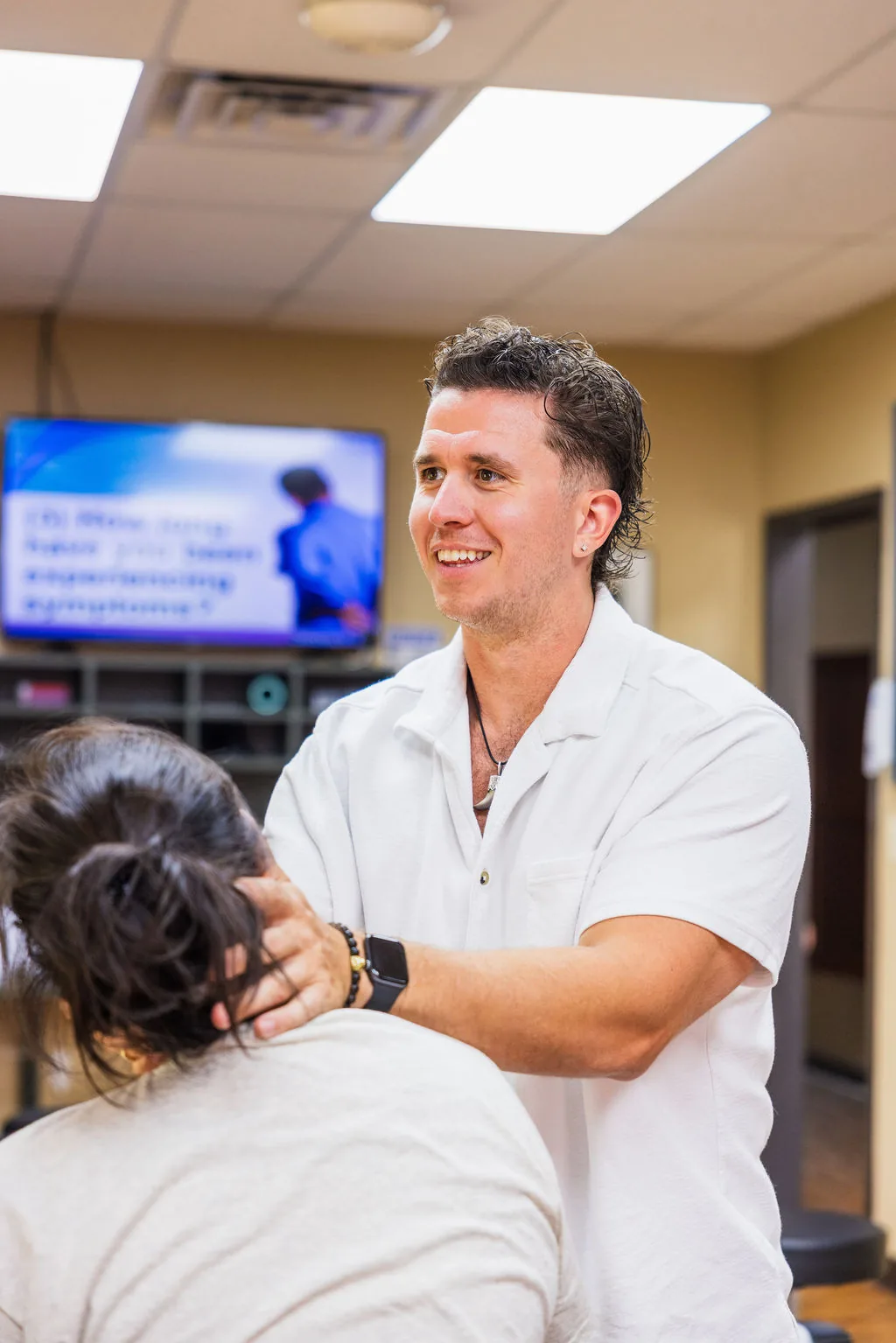
We look for why your neck is stiff, not just where. Dr. Hansen starts with your history: when it started, what you were doing, whether it’s happened before, and whether you have headaches, numbness or tingling. The exam includes range of motion, orthopedic and neurologic testing, and palpation of the neck and upper back to find which joints and muscles are guarding. Digital X-rays are available in-house, which matters most after an accident or a fall.
When care is a good fit, it follows three steps. Prime uses guided breathing to help the guarding muscles let go. Facilitate is a gentle, specific adjustment to the stiff joints of the neck and upper back, with low-force options when turning your head hurts too much for anything else. Integrate covers easy movements to keep it loose and changes to your desk, pillow and phone habits. It’s the same approach we use in whiplash and neck pain care.
Some stiff necks need medical care first. Cleveland Clinic advises going to the emergency room when a stiff neck comes with fever, nausea or vomiting, light sensitivity, confusion or extreme sleepiness, since these can be signs of meningitis. Harvard Health also flags these as reasons to get help right away:
Patients from Bryan and nearby towns are welcome too. Schedule an appointment and we’ll find out what’s keeping your neck locked up.
Most stiff necks from sleeping wrong or a minor strain improve within a few days with gentle movement and heat. Cleveland Clinic recommends seeing a provider if trouble moving your neck lasts more than a few days or doesn’t improve with home care. Stiffness after a car accident or fall should be checked sooner.
Heat usually helps a stiff neck more, because it relaxes the tight, guarding muscles. Cleveland Clinic suggests a warm shower, bath, heating pad or warm compress. Ice is more useful in the first day or two after an injury, when the area is sore and irritated.
Go to the emergency room if a stiff neck comes with fever, nausea or vomiting, sensitivity to light, confusion, extreme sleepiness or a rash of small round spots. Cleveland Clinic notes these can be signs of meningitis, which needs treatment right away. Severe neck pain after a significant fall or crash also needs prompt medical care.
Yes, when the stiffness comes from irritated joints and tight muscles, which is the most common reason. Gentle adjustments, soft tissue work and simple home movements help many people turn their head comfortably again. Dr. Hansen checks for red flags first and refers you for medical care if anything points to a more serious cause.
Sleeping on your back or side with a pillow that keeps your neck level with your body is usually best. Stomach sleeping twists the neck to one side for hours, which is a common trigger. If your pillow pushes your head up or lets it sag, try a thinner or firmer one.
Yes. We see students, desk workers and commuters from College Station, Bryan and across the Brazos Valley whose stiff necks keep coming back. Your first visit includes a full history and exam, so we can find what keeps setting it off and give you a plan to break the cycle.
Proudly serving College Station and Bryan, River of Life Chiropractic starts every visit with a real exam, not a guess. Ready to find out what’s actually going on?
Real feedback from the patients we’ve had the privilege to care for


 Trustindex verifies that the original source of the review is Google.
 Trustindex verifies that the original source of the review is Google.
 Trustindex verifies that the original source of the review is Google.
 Trustindex verifies that the original source of the review is Google.
 Trustindex verifies that the original source of the review is Google.
 Trustindex verifies that the original source of the review is Google.
 Trustindex verifies that the original source of the review is Google.
 Trustindex verifies that the original source of the review is Google.
 Trustindex verifies that the original source of the review is Google.
 Trustindex verifies that the original source of the review is Google.

College Station is home base, but patients regularly drive in from Bryan, Navasota, Caldwell, and Snook for care, most traveling somewhere between 30 and 45 minutes to get here. Within College Station itself, we see a lot of familiar faces from Pebble Creek, Indian Lakes, Southern Pointe, and the Castlegate and Castlerock communities.
Wherever you are driving in from, the visit looks the same: a real exam first, X-rays when they are actually needed, and a plan built around what your body is showing us, not a guess based on your zip code.
Contact us for expert chiropractic care in College Station, TX.
Monday: 9am – 1pm, & 3pm – 6pm
Tuesday: 3pm – 6pm
Wednesday: 9am – 1pm, & 3pm – 6pm
Thursday: 9am – 1pm, & 3pm – 6pm
Friday: 9am – 1pm, & 3pm – 6pm
Saturday: Closed
Sunday: Closed
