
Quick Summary: A tension headache is a dull, steady pressure that feels like a tight band around the head, often with sore neck and shoulder muscles. It is the most common type of headache. Stress, long hours at a screen, neck strain and poor sleep are common triggers. Dr. Hansen checks the neck and upper back, and sorts tension headaches from migraine and headaches that start in the neck.

A tension headache is a dull, steady pressure that feels like a tight band wrapped around your head. Cleveland Clinic calls it the most common type of headache and describes constant mild to moderate pressure, often across the forehead and temples, with aching or tight muscles in the scalp, neck and shoulders. An episode averages four to six hours but can last anywhere from 30 minutes to a week.
People usually describe:
How often they happen matters. Cleveland Clinic separates them by frequency: infrequent episodic headaches happen one day a month or less, frequent episodic headaches happen one to 14 days a month, and chronic tension headaches happen on more than 15 days a month for three months. Frequent or chronic headaches are worth a closer look rather than another bottle of pain relievers.
We see a lot of these at our chiropractor’s office in College Station, especially in Texas A&M faculty, students during exam weeks, and anyone whose day is spent at a desk.

Cleveland Clinic lists stress, poor posture and neck strain, eye strain, sleep problems, jaw problems, anxiety and depression among the common triggers. Several of these tend to stack. A short night, a deadline and six hours hunched over a laptop make a familiar recipe, and it’s one more example of how stress lands in the body.
When your headaches show up can be a clue. Ones that build through the afternoon often point to long screen time and tired neck muscles, while ones that greet you first thing in the morning can hint at sleep position or jaw clenching.
Long, still days at a screen are a big one. The neck and shoulder muscles hold the head up for hours without a break, and by afternoon they’re tight and sore. That’s part of why forward head posture and tension headaches so often show up in the same people, even though research doesn’t point to posture alone as the cause.
Telling a tension headache from a migraine changes what makes sense to do:
Plenty of people have more than one type, which is why the pattern over several weeks tells more than a single bad day. Our side-by-side guide to telling headache types apart includes a simple headache diary you can start now.
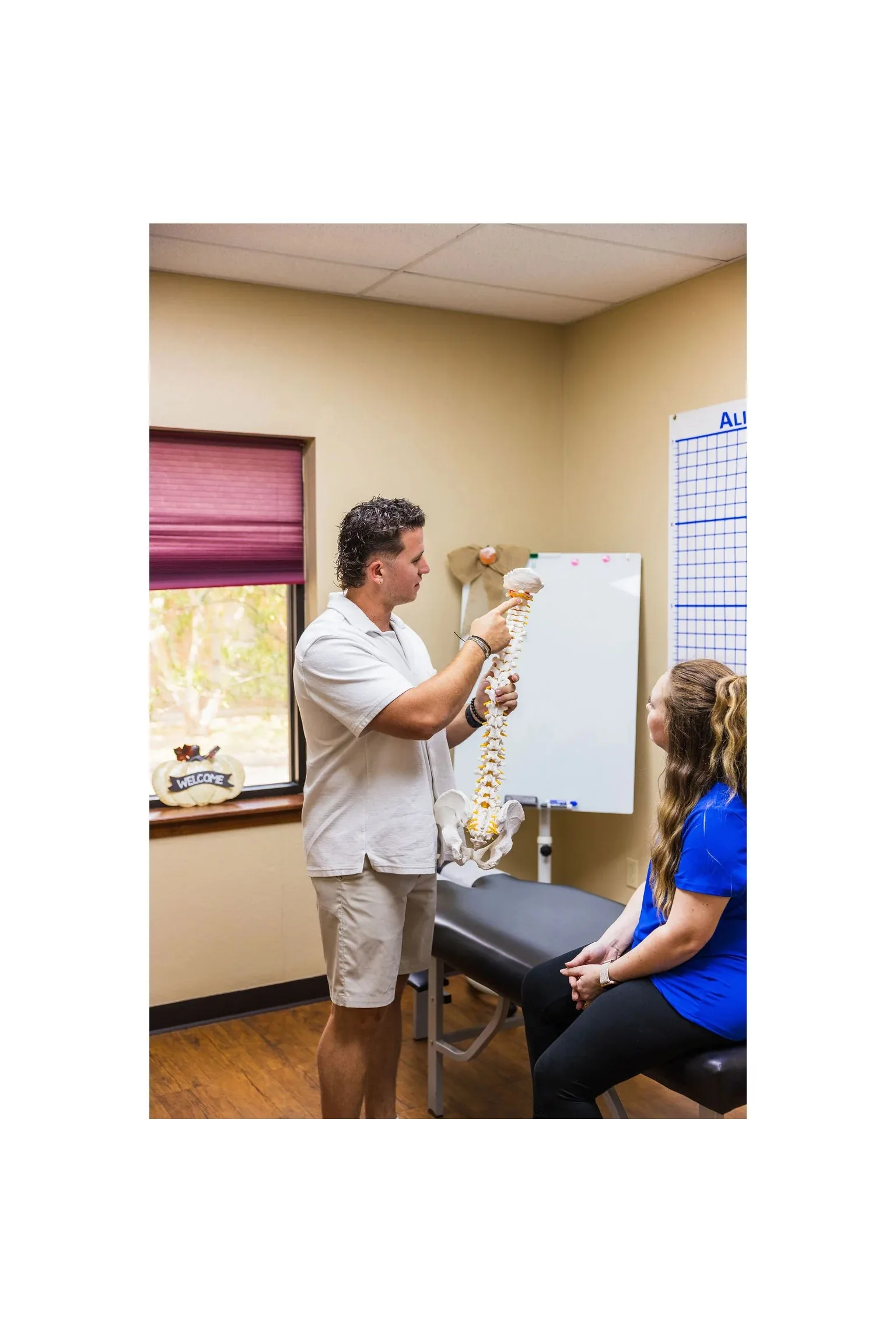
Dr. Hansen starts with a detailed headache history: where it sits, what it feels like, how often it happens, what you’ve tried, and how much pain medicine you’re using. Then comes a hands-on exam of your neck and upper back, including range of motion, joint motion, muscle tension at the base of the skull and across the shoulders, and orthopedic and neurologic testing. Digital X-rays are taken in-house only when the findings call for them. Sorting headache types takes that full picture, which is why we examine before adjusting.
When the neck and shoulders are part of the pattern, our headache relief care follows three steps. Prime uses guided breathing to help your body settle out of a guarded, stressed state. Facilitate is a gentle, specific adjustment to stiff areas of the neck and upper back. Integrate covers screen setup, movement breaks, sleep and home exercises. Soft tissue work on the tight muscles at the base of the skull is often part of the plan. We work alongside your medical doctor, not in place of one.
Watch your pain medicine use too. Cleveland Clinic advises limiting over-the-counter pain relievers to about 10 days a month, since using them more often can lead to rebound headaches. If you keep a headache log, count the days you take pain medicine along with the headache days.
Some headaches need medical care right away. Call 911 or go to the ER for a sudden, severe headache that feels like the worst of your life, a headache with fever and a stiff neck, or a headache with weakness, numbness, confusion, trouble speaking or vision changes. The American Stroke Association lists sudden severe headache among stroke warning signs. A headache after a head injury, or a new headache pattern after age 50, also needs a medical evaluation first.
If yours fits the everyday pattern, we see patients from Bryan and nearby towns as well as College Station neighborhoods like Indian Lakes. Schedule your first appointment and we’ll sort out what’s driving them.
When tight, stiff neck and shoulder muscles are part of the pattern, chiropractic care may help as one piece of the plan. Dr. Hansen looks for joint stiffness and muscle tension in the neck and upper back and works on those, along with screen setup, movement and stress habits. He’ll tell you after your exam whether he thinks he can help, and if your headaches point elsewhere, he’ll refer you.
Tension headaches usually feel like pressure or a tight band, don’t get worse when you walk or climb stairs, and rarely bring strong light or sound sensitivity. Migraines are more often throbbing, one-sided, and come with nausea or sensitivity to light and sound. Many people have both. A headache diary over a few weeks makes the pattern much clearer.
Common triggers include stress, long hours in one position at a screen, neck strain, eye strain, poor sleep and jaw clenching. Often it’s a combination rather than one thing. Noticing what came before each headache, such as a short night, a long screen session or a stressful meeting, helps you see your own triggers.
Cleveland Clinic defines chronic tension headaches as happening on more than 15 days a month for three months. Frequent episodic headaches happen one to 14 days a month. If you’re getting them more than a few days a month, or you’re reaching for pain relievers often, it’s worth getting evaluated rather than riding them out.
Yes. Stress is one of the most common tension headache triggers. It tends to keep the neck, shoulder and jaw muscles tight, often without you noticing until the headache arrives. Breathing, regular movement, good sleep and breaks from the screen all help. Guided breathing is built into every visit here for that reason.
It’s common, but it’s not something you have to accept. Long days of reading, writing and grading on a laptop, plus deadlines and short sleep, are a classic setup for afternoon tension headaches. We see this often in Texas A&M students and faculty in College Station. Raising your screen, getting up every half hour and tracking your headaches are good first steps, and an exam can show whether your neck is part of it.
Proudly serving College Station and Bryan, River of Life Chiropractic starts every visit with a real exam, not a guess. Ready to find out what’s actually going on?
Real feedback from the patients we’ve had the privilege to care for


 Trustindex verifies that the original source of the review is Google.
 Trustindex verifies that the original source of the review is Google.
 Trustindex verifies that the original source of the review is Google.
 Trustindex verifies that the original source of the review is Google.
 Trustindex verifies that the original source of the review is Google.
 Trustindex verifies that the original source of the review is Google.
 Trustindex verifies that the original source of the review is Google.
 Trustindex verifies that the original source of the review is Google.
 Trustindex verifies that the original source of the review is Google.
 Trustindex verifies that the original source of the review is Google.

College Station is home base, but patients regularly drive in from Bryan, Navasota, Caldwell, and Snook for care, most traveling somewhere between 30 and 45 minutes to get here. Within College Station itself, we see a lot of familiar faces from Pebble Creek, Indian Lakes, Southern Pointe, and the Castlegate and Castlerock communities.
Wherever you are driving in from, the visit looks the same: a real exam first, X-rays when they are actually needed, and a plan built around what your body is showing us, not a guess based on your zip code.
Contact us for expert chiropractic care in College Station, TX.
Monday: 9am – 1pm, & 3pm – 6pm
Tuesday: 3pm – 6pm
Wednesday: 9am – 1pm, & 3pm – 6pm
Thursday: 9am – 1pm, & 3pm – 6pm
Friday: 9am – 1pm, & 3pm – 6pm
Saturday: Closed
Sunday: Closed
